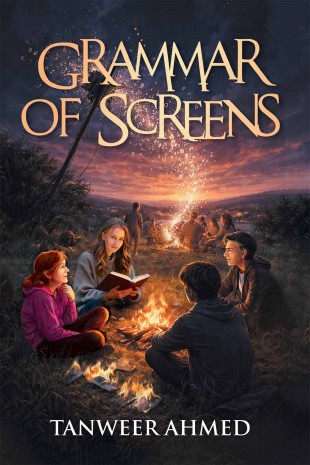
Grammar of Screens
Author: Tanweer Ahmed
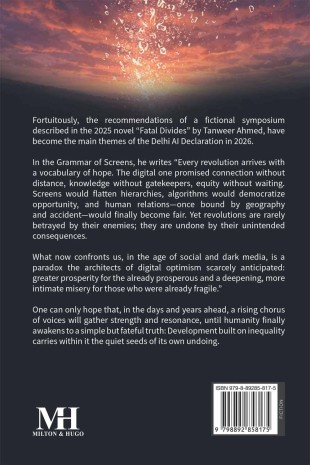
View Back Cover
BOOK DETAILS
Genre: Fiction
Pages: 130
Trim Size: 6x9
eBook ISBN: 9798892858168
Paperback ISBN: 9798892858175
Hardback ISBN: 9798892858182
Grammar of Screens
Author: Tanweer Ahmed
BOOK DETAILS
Genre: Fiction
Pages: 130
Trim Size: 6x9
eBook ISBN: 9798892858168
Paperback ISBN: 9798892858175
Hardback ISBN: 9798892858182
About The Book
This novel opens at that fault line, where the internet loosens its grip just enough for language to reclaim its drama, and a new generation learns that old values are not relics at all, but dormant forces, impatient to be spoken back into life.
The day Australia unplugged its teenagers, language came back with a gasp. Words—long starved by swipes and symbols—returned heavier, louder, almost unruly. Conversations stumbled at first, like muscles unused, but soon they stretched into stories, confessions, and arguments that refused to fit inside a screen. The shock was not that young people survived without social media; it was that they discovered something waiting underneath it—time, attention, and the strange pleasure of being misunderstood and trying again.
It is a comment on the impact of internet on human perceptions of reality and resulting relationships. Languages are supposed to determine perceptions of reality. Does the digital lingo release humans from the prisons of languages?
About The Author
Born in Peshawar in 1954, Tanweer Ahmed studied English Literature at the University of Peshawar and became a public servant in 1979. He retired from public service in 2014. He is married with two sons and lives in Islamabad, Pakistan.
He has previously authored “The Cling Effect” — a story of underdevelopment in postmodern times, and “Fatal Divides”— a 2025 novel set in the backdrop of indifference to the climate change and how AI is further widening the gaps between the rich and the poor.
As the head of the international relations in the Department of the Auditor General of Pakistan, he has widely travelled abroad and participated in various international congregations on public accountability. His physical involvement with developing computer based systems developed in his department for the improvement of financial management in Pakistan is reflected in his works and gives a human touch to the developments of AI.
About The Book
This novel opens at that fault line, where the internet loosens its grip just enough for language to reclaim its drama, and a new generation learns that old values are not relics at all, but dormant forces, impatient to be spoken back into life.
The day Australia unplugged its teenagers, language came back with a gasp. Words—long starved by swipes and symbols—returned heavier, louder, almost unruly. Conversations stumbled at first, like muscles unused, but soon they stretched into stories, confessions, and arguments that refused to fit inside a screen. The shock was not that young people survived without social media; it was that they discovered something waiting underneath it—time, attention, and the strange pleasure of being misunderstood and trying again.
It is a comment on the impact of internet on human perceptions of reality and resulting relationships. Languages are supposed to determine perceptions of reality. Does the digital lingo release humans from the prisons of languages?
About The Author
Born in Peshawar in 1954, Tanweer Ahmed studied English Literature at the University of Peshawar and became a public servant in 1979. He retired from public service in 2014. He is married with two sons and lives in Islamabad, Pakistan.
He has previously authored “The Cling Effect” — a story of underdevelopment in postmodern times, and “Fatal Divides”— a 2025 novel set in the backdrop of indifference to the climate change and how AI is further widening the gaps between the rich and the poor.
As the head of the international relations in the Department of the Auditor General of Pakistan, he has widely travelled abroad and participated in various international congregations on public accountability. His physical involvement with developing computer based systems developed in his department for the improvement of financial management in Pakistan is reflected in his works and gives a human touch to the developments of AI.
RECOMMENDED BOOKS
 The Gate is on Backwards
Glen Watts
The Gate is on Backwards
Glen Watts
 Tonight They Come for US All: It All Comes Do...
Naru K. Williams II
Tonight They Come for US All: It All Comes Do...
Naru K. Williams II
 Dear Dream Maker: I Don't Sleep. I Dream
Dr. Leggie Boone
Dear Dream Maker: I Don't Sleep. I Dream
Dr. Leggie Boone
 Young Faith: My Story, My Struggles, My Trium...
Shalonda Falconer with Lorian Tompkins
Young Faith: My Story, My Struggles, My Trium...
Shalonda Falconer with Lorian Tompkins
 Tonight They Come Back
Naru K. Williams II
Tonight They Come Back
Naru K. Williams II
 Preservations of a Dying Adolescence
Ella Cofield
Preservations of a Dying Adolescence
Ella Cofield
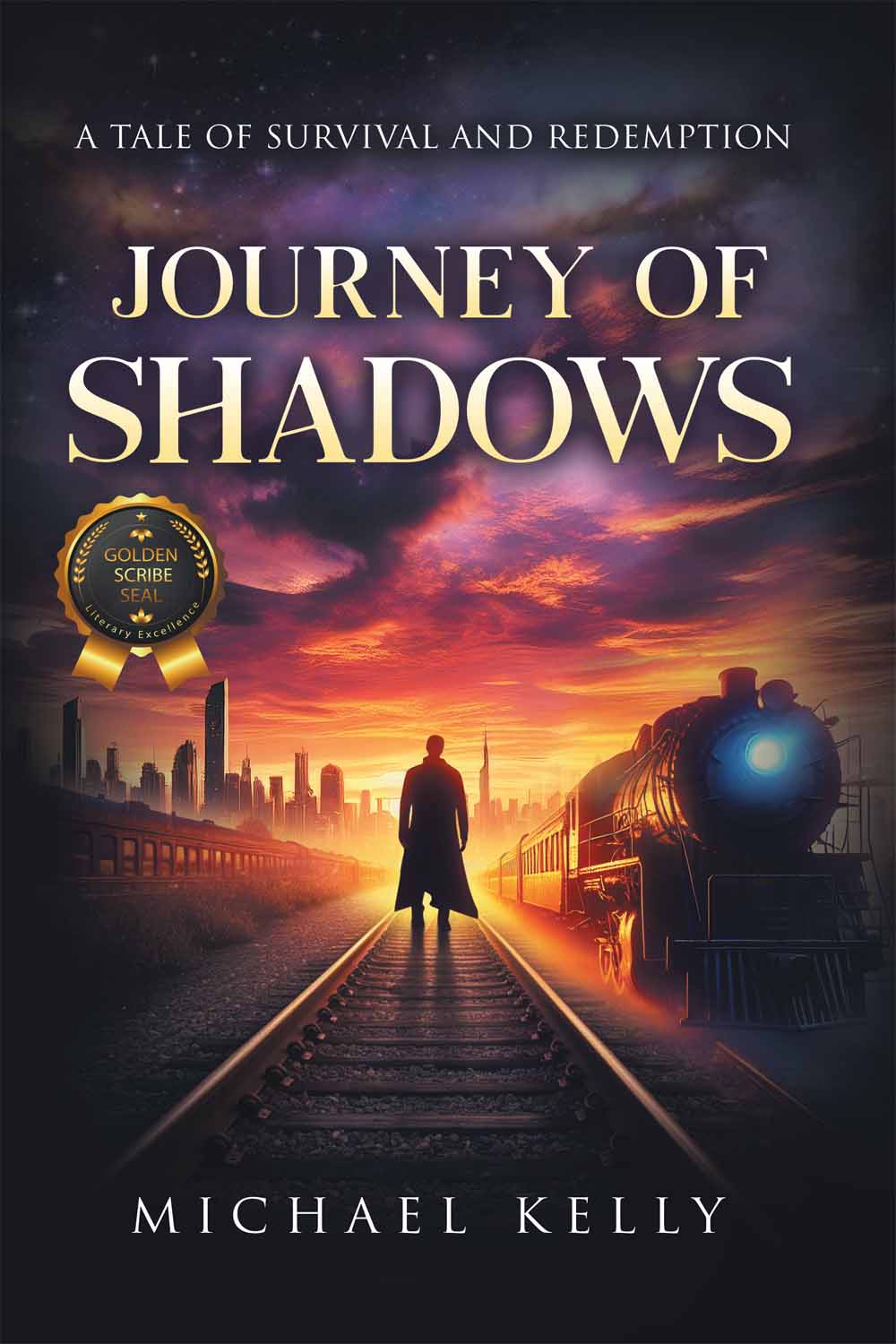 Journey of Shadows: A Tale of Survival and Re...
Michael Kelly
Journey of Shadows: A Tale of Survival and Re...
Michael Kelly
 Brick by Brick
Dylan House
Brick by Brick
Dylan House