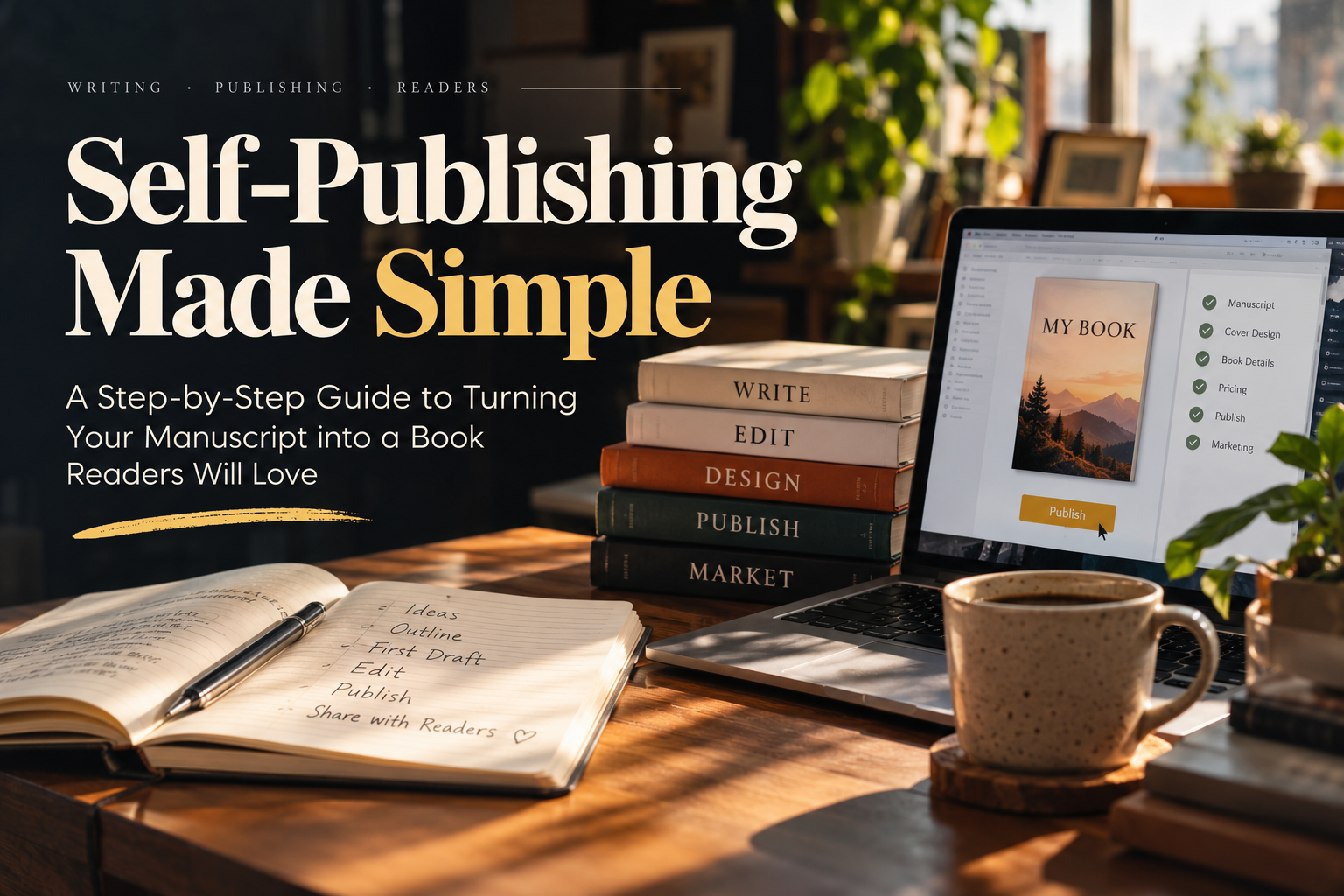
Ready to Publish a Book? A Clear Path From Manuscript to Readers

Want to publish a book but unsure what to do first? Start by identifying where you are today and what you want the book to accomplish. A finished manuscript, an unfinished draft, and a new book idea each call for a different next step.
Publishing a book can involve manuscript preparation, editing, cover design, interior formatting, print and eBook production, distribution, metadata, and marketing. You do not have to solve every decision at once. A clear plan helps you decide what to handle yourself, what to research, and where professional support could be useful.
Start with where you are today
If you have an idea or outline
Your first priority is defining the project. Clarify the genre, intended readers, format, purpose, and the stage you want to reach. You can research publishing options early, but do not let production decisions distract you from developing the manuscript.
If you are writing a draft
Focus on completing the draft and learning what your chosen path will require. You may not need a finished manuscript to ask questions, compare services, or build a timeline. Be specific about what is still in progress so the next conversation is useful.
If you have a finished manuscript
Read the manuscript as a complete work and identify the editorial and production work needed before release. Decide whether you need developmental editing, copy editing, proofreading, cover design, interior formatting, or help with distribution and marketing.
Choose the publishing path that fits your goals
Authors commonly explore traditional publishing, self-publishing, and service-based or hybrid support. Each path changes who makes decisions, who pays for which work, how the book is produced, and how rights and accounts are handled.
Traditional publishing
A traditional publisher selects the work it wants to acquire and operates according to its own editorial and business model. Submission requirements and relationships vary. If you are exploring this route, research the publisher's list, submission guidelines, genre fit, and rights language.
Self-publishing
Self-publishing places more responsibility with the author and can provide more control over timing, design, pricing, and distribution decisions. You may work independently or hire specialists for selected tasks. Planning your budget and workflow is essential.
Service-based or hybrid support
A service company may help with editing, design, formatting, distribution setup, marketing, or project coordination. Ask the company to describe its role clearly. Do not assume that a service package is the same as a traditional publishing relationship.
Know what support you may need
The right support depends on the manuscript and your own skills, time, and goals. Services often considered by authors include:
- Manuscript editing, copy editing, and proofreading.
- Book cover design and genre-appropriate visual direction.
- Interior layout for print and eBook formats.
- Print-on-demand and digital publishing setup.
- Distribution, retailer listing, and metadata support.
- Author platform, launch planning, and marketing support.
Not every project needs every service. A poetry collection, a children's picture book, a memoir, and a business book may have different editorial, design, format, and audience needs. Ask for a scope based on your actual book rather than a generic list.
From manuscript to reader: the publishing workflow
1. Revise and edit
Complete the draft, revise for structure and clarity, and choose the level of editorial help that fits the project. Editing is not one service: developmental editing, copy editing, and proofreading address different needs.
2. Design and format
Plan the cover, interior layout, print specifications, and eBook files. Review proofs carefully and allow time for corrections. Ask who owns the final source files and what happens if you need future changes.
3. Set up distribution
Decide how readers will find or order the book. Review retailer information, pricing, categories, territories, discounts, returns, and account ownership. Distribution availability does not guarantee reader demand or sales.
4. Plan the release and ongoing promotion
Create a launch plan that matches your audience and resources. Prepare a clear book description, author bio, cover assets, and links. Then choose promotion activities you can sustain after launch instead of relying on one short campaign.
Questions to ask before choosing help
- What exactly is included, and what costs extra?
- Who performs the work and how many revisions are included?
- Who owns the manuscript, cover, files, ISBN, and publishing accounts?
- What is the expected timeline and what must I approve?
- Where will the book be distributed and what reporting will I receive?
- What marketing work is promised and how will it be measured?
A provider should be able to answer these questions in writing. Review the agreement carefully and seek independent legal or financial advice when you need it.
Publishing support for many genres
Publishing needs vary by genre because the intended reader, format, design conventions, and marketing channels can change. Common projects include fiction, romance, mystery, fantasy, memoir, biography, poetry, children's books, business books, self-help, history, and Christian or inspirational books.
Genre does not determine a single publishing path, but it helps you evaluate whether a provider understands the audience and production choices your book may need.
Frequently asked questions
How do I start publishing my book?
Identify your manuscript stage, genre, goals, timeline, and the support you may need. Then compare the publishing path and services that match those priorities.
Can I get help if my manuscript is not finished?
You can begin researching and planning before the manuscript is finished. Share your stage accurately so the conversation focuses on the work that is relevant now.
What publishing services are available?
Services may include editing, proofreading, cover design, formatting, print and eBook setup, distribution, author branding, and marketing. Confirm the actual scope and pricing before choosing.
Should I self-publish or work with a publishing company?
There is no universal answer. Compare control, responsibilities, cost, timeline, rights, distribution, and your goals. The best choice is the one you understand and can manage realistically.
Next step: Ready to publish a book? Share your manuscript stage, genre, timeline, and goals to begin a clearer, no-obligation conversation about publishing options and possible support.