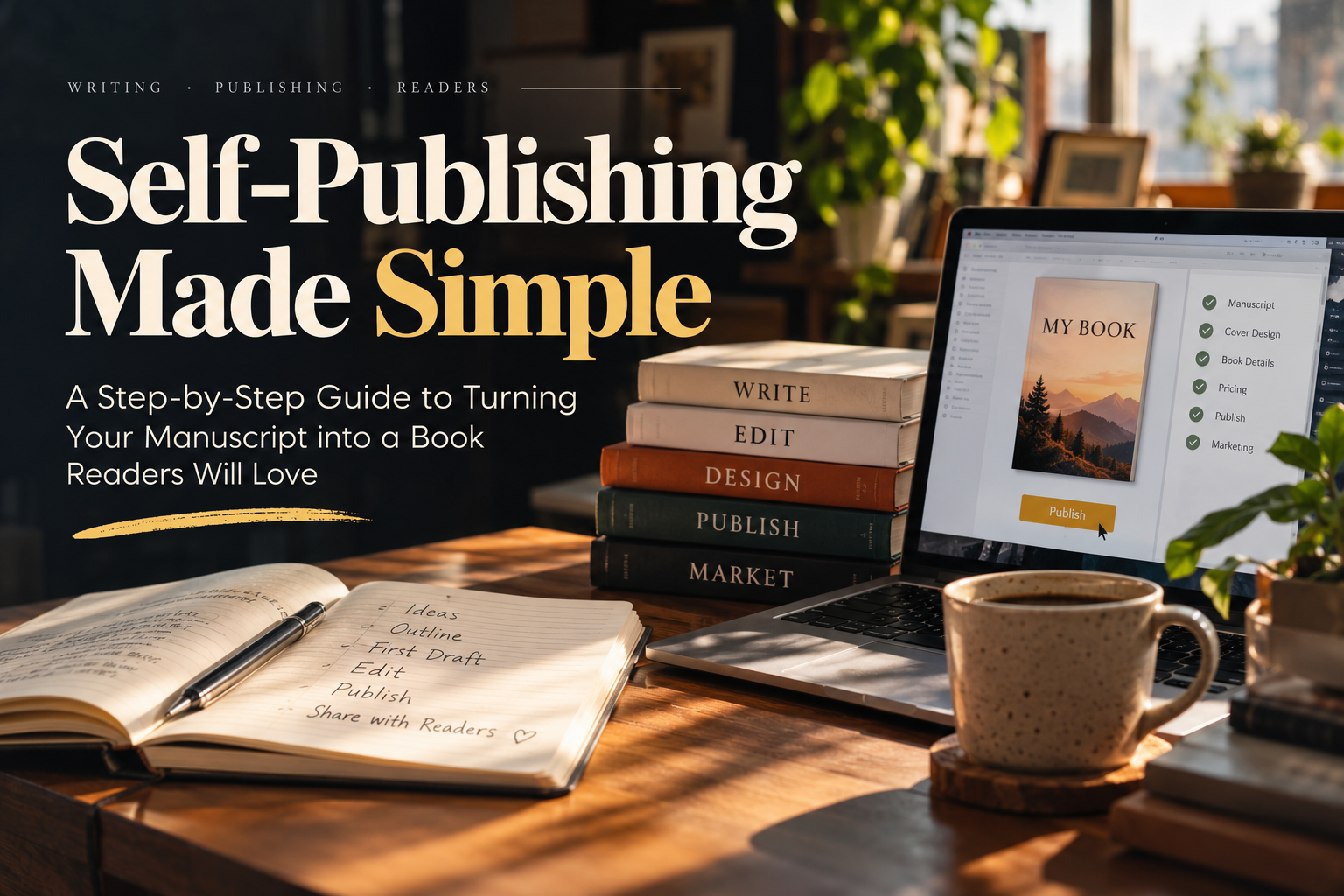
How to Get Your Book Published: A Practical Step-by-Step Guide

If you are wondering how to get published, begin with a practical plan rather than a single application or package. The right next step depends on whether your manuscript is an idea, a draft, or a finished book; whether you are considering traditional publishing or self-publishing; and how much control, time, and budget you have available.
A useful path usually includes five stages: prepare the manuscript, choose a publishing path to research, prepare the required materials, plan production and distribution, and build a realistic launch plan. You can start researching before every detail is finished, but your manuscript stage should shape the advice you seek.
Step 1: Get the manuscript ready
A publishable project starts with an honest view of the manuscript. If the draft is unfinished, focus on completing and revising it. If the draft is complete, read it as a whole and identify the editorial work needed before production. A manuscript may need more than proofreading: structure, pacing, clarity, voice, and consistency can all affect the reader experience.
- Confirm the audience and genre you are writing for.
- Read the manuscript as a complete work and make a revision plan.
- Decide whether you need developmental editing, copy editing, proofreading, or specialized review.
- Prepare a clear description of the book and what readers can expect.
You do not have to wait until the final page is perfect before learning about publishing. Early research can help you understand what your chosen path will require and which tasks should happen before others.
Step 2: Choose a publishing path to research
There is no single route for every author. Traditional publishing, self-publishing, and service-based or hybrid models differ in control, cost, timeline, rights, responsibilities, and submission requirements. Your goal is not to choose the path that sounds most impressive; it is to choose the path that fits your project and resources.
Traditional publishing
Traditional publishing may involve a query letter, a proposal, sample chapters, or another submission process. Requirements vary by genre and publisher. Some publishers work primarily with agents, while others accept submissions under their own guidelines. Check each publisher's current requirements instead of assuming that every publisher follows the same process.
Self-publishing
Self-publishing gives the author responsibility for or control over many decisions, including editing, design, formatting, distribution, pricing, metadata, and promotion. You may complete some tasks yourself and hire professionals for others. A realistic budget and schedule are important because the author coordinates the work.
Service-based or hybrid models
Service-based and hybrid arrangements can provide support for production or marketing, but the details vary significantly. Ask what the company provides, what you pay, what rights you keep, how revisions work, and who controls the final files and accounts.
Step 3: Prepare the materials your path requires
The materials you need depend on your publishing path and genre. A traditional submission may require a query or proposal, while a self-publishing plan may require final files, production specifications, and a release schedule.
- A short book description and audience statement.
- An author biography and relevant platform information.
- A polished manuscript or sample chapters, where appropriate.
- A practical budget and timeline for services you may purchase.
- A list of questions about rights, costs, distribution, and deliverables.
Keep these materials current as the project changes. The more clearly you can describe your manuscript and goals, the easier it is to compare information that applies to your situation.
Step 4: Plan production and distribution
Once you understand the path you want to research, map the work between manuscript and reader. Editing should lead into final proofing. Design and formatting should account for the print and digital formats you plan to use. Distribution and retailer setup require accurate metadata, pricing, account details, and final files.
- Set approval milestones for editing, cover design, formatting, and proofs.
- Keep your final files, ISBN information, and account access organized.
- Review the book description, author name, categories, and other retailer metadata.
- Allow time for revisions, proof copies, corrections, and decisions.
Distribution can make a book available through particular channels, but availability is not a promise of sales or visibility. Ask which channels are included, in which territories, under whose account, and what reporting you will receive.
Step 5: Build a launch and promotion plan
Marketing works best when it matches the book, audience, budget, and time you can sustain. Start with a clear positioning statement, accurate retailer information, and a simple way for interested readers to learn more. Then decide which launch activities and ongoing promotion are realistic.
- Define the readers and communities most likely to care about the book.
- Prepare a concise description, author bio, cover assets, and retailer links.
- Choose a launch window and decide what you can do before and after release.
- Ask providers to describe marketing deliverables, timing, and reporting in writing.
What first-time authors should watch for
Be cautious of pressure to sign quickly, vague packages, unclear ownership, hidden fees, and guarantees of acceptance, sales, reviews, or bestseller status. A provider should be able to explain what it can control and what depends on the manuscript, market, retailer, audience, and author decisions.
Do not assume that a paid service is a literary agent or that a company's use of the word publisher tells you how the arrangement works. Ask for the role, scope, rights, cost, and next steps in plain language.
How long does it take to publish a book?
The timeline can range from months to longer depending on manuscript readiness, editing, design, formatting, approvals, distribution, and the publishing model. A finished manuscript still needs time for production and review. Build a schedule with dependencies instead of relying on a single promised date.
Frequently asked questions
How do I get my book published?
Prepare the manuscript, define the audience and goals, research the publishing paths, prepare the required materials, and plan editing, production, distribution, and marketing. The order and depth of each step depend on the path you choose.
Do I need a finished manuscript to get published?
Many publication steps require a complete or nearly complete manuscript, but you can research options and plan services while you are writing. Your genre and publishing path affect what materials are needed.
Should I use traditional publishing or self-publishing?
Neither path is universally right. Compare control, cost, timeline, rights, responsibilities, distribution, and your goals before deciding which path to research further.
Do I need a literary agent?
Some traditional publishers work through agents, while others have different submission requirements. Check each publisher's current guidelines. A paid publishing service is not automatically a literary agent.
What should I do first?
Write down your manuscript stage, genre, goals, timeline, and the decisions that feel unclear. That short project brief gives you a useful starting point for research and conversations with potential providers.
Next step: If you want help organizing your publishing next step, share your manuscript stage, genre, timeline, and goals so you can begin with clearer information about the paths and services that may be relevant.