How to Build an Author Email List With a Reader Magnet and Welcome Sequence

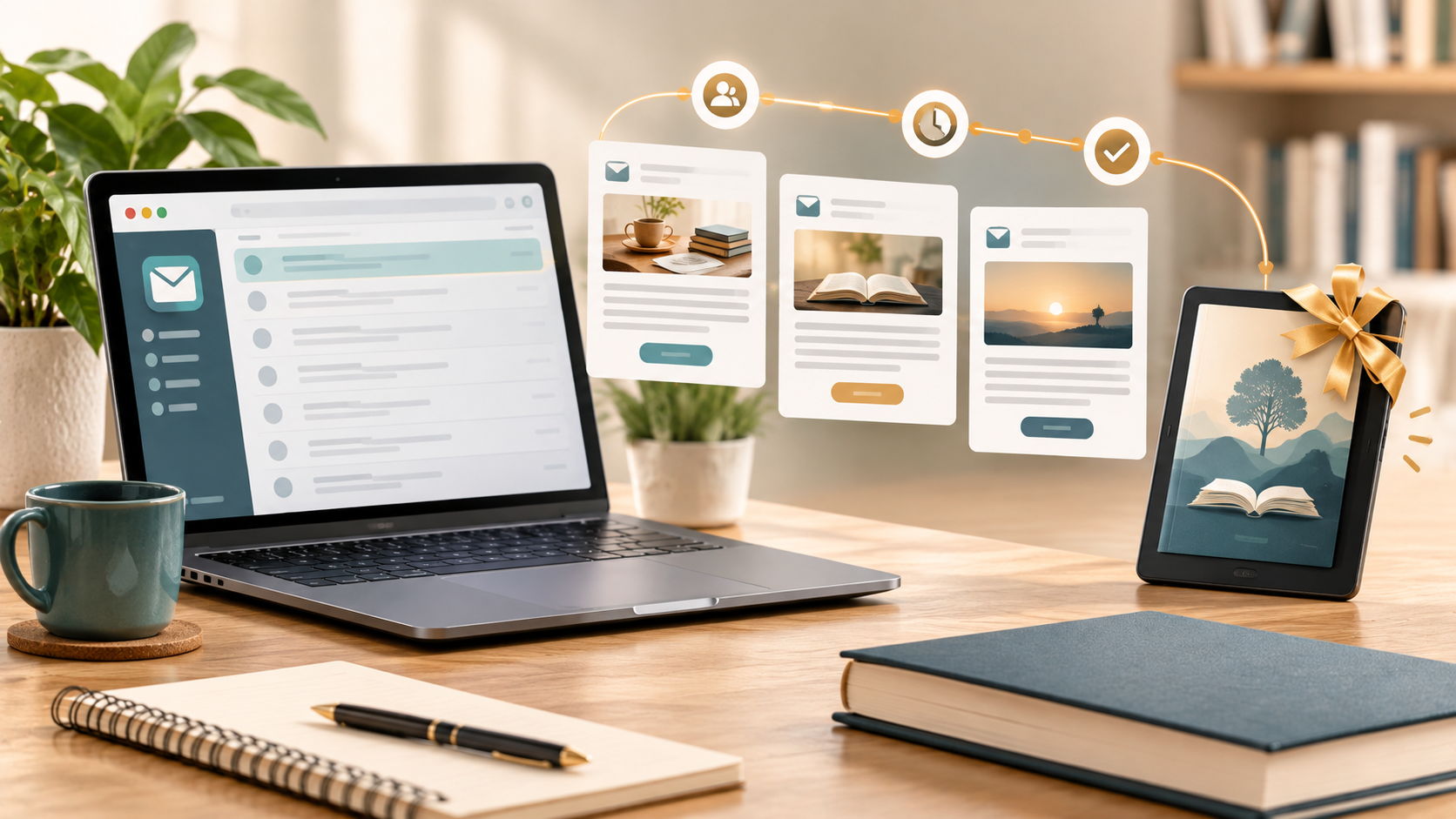
Social media can help readers discover an author, but an email newsletter provides a more direct way to maintain a relationship with people who want to hear from them.
Instead of relying entirely on social feeds, authors can invite interested readers to subscribe to updates, stories, resources, and book announcements.
An effective author email list starts with a clear reason to subscribe, a simple permission-based signup process, and messages that consistently deliver what readers expected.
You don't need thousands of subscribers to begin. You need a useful reason for readers to join and a sustainable plan for communicating with them.
Why Authors Should Build an Email List
An author newsletter allows readers to opt in to ongoing communication.
Subscribers might receive upcoming release announcements, exclusive short stories, behind-the-scenes updates, or useful resources related to an author's nonfiction subject.
Unlike social media followers, newsletter subscribers have deliberately chosen to receive communication through email.
However, an email list is not completely independent of third-party services. Delivery still depends on email providers, platform policies, permission requirements, and sender reputation.
The main benefit is the opportunity to develop a continuing relationship with readers.
Step 1: Define What Subscribers Will Receive
Before creating a signup form, decide what value your newsletter offers.
A fiction author might promise occasional behind-the-scenes notes, release announcements, and bonus stories.
A nonfiction author could share practical advice, recommended resources, and new publication updates.
Be specific about the type of content and approximate frequency.
For example:
Get a free short story set in the world of the upcoming novel, plus occasional updates about new releases and bonus fiction.
This promise tells readers what they receive immediately and what emails to expect afterward.
Avoid vague signup messages that provide little reason to join.
Step 2: Create a Reader Magnet
A reader magnet is a free resource offered to attract readers who are genuinely interested in your work.
The strongest reader magnets connect closely to the books or expertise you want to promote.
Reader Magnet Ideas for Fiction Authors
Consider a short prequel, bonus scene, character backstory, or an original short story that introduces your fictional world.
Ideally, the material should stand on its own while making interested readers curious about your other work.
Reader Magnet Ideas for Nonfiction Authors
Options include a checklist, workbook, short guide, resource list, or practical template.
For example, an author writing about personal organization might offer a weekly planning worksheet.
The reader magnet should solve a small, relevant problem rather than attempt to reproduce the entire book.
Step 3: Create a Simple Signup Page
Your signup page should explain the offer clearly.
Include a short headline, a description of the free resource, the benefits of subscribing, and a straightforward signup form.
Ask only for information you actually need.
For many author newsletters, an email address is sufficient. A first name can be optional.
Clearly explain that subscribing also means receiving future newsletter messages when that is part of the offer.
Provide access to relevant privacy information.
Step 4: Choose an Appropriate Opt-In Process
Email marketing requires attention to consent and applicable regulations.
Single opt-in adds a subscriber after they submit a signup form.
Double opt-in requires an additional confirmation step, usually by clicking a link sent through email.
According to Mailchimp's double opt-in documentation, confirmation helps verify the address and provides additional evidence of the subscription.
Which method is appropriate depends on your audience, marketing service, and applicable data protection obligations.
For example, authors marketing to people in the European Union should review relevant GDPR requirements instead of assuming that any signup method automatically establishes valid consent.
For commercial email covered by the United States CAN-SPAM Act, the Federal Trade Commission also requires accurate sender information, appropriate identification, and an effective way to opt out.
Never add people to a promotional mailing list merely because they bought your book, contacted you privately, or gave you a business card without establishing an appropriate basis for marketing.
Step 5: Build an Automated Welcome Sequence
A welcome sequence introduces new subscribers to your work.
It can also deliver the promised resource and gradually establish a connection.
A simple three-email sequence is enough to begin.
Email 1: Deliver the Reader Magnet
Suggested timing: Immediately after the subscriber completes the required signup process.
Purpose: Fulfill the offer and establish trust.
Thank the reader, provide the promised resource, and briefly explain what future emails will contain.
Keep the message focused on the reason they subscribed.
Email 2: Introduce Your Writing
Suggested timing: Two or three days later.
Purpose: Help subscribers connect with the author.
Share a meaningful detail about your writing, books, or creative interests.
Fiction authors might explain the inspiration behind a setting. Nonfiction authors could share a useful personal observation or practical lesson without overstating expertise.
End with a simple question that invites an optional reply.
Email 3: Recommend a Relevant Next Step
Suggested timing: Several days after the second message.
Purpose: Connect the free resource with your broader work.
Introduce a published book, an additional free resource, or a useful article.
Explain why the recommendation is relevant to the reader's interests.
Avoid pressuring subscribers to buy.
These timings are illustrative. Adjust them based on reader expectations and feedback.
Step 6: Promote the Signup Page
Once the signup process works, make it easy to discover.
Consider placing the signup invitation on your author website, relevant blog posts, and appropriate social media profiles.
You can also mention it at author events or in the back matter of your books.
Use the same clear value proposition wherever you promote it.
If you share excerpts or reader-focused posts on social media, a newsletter invitation can be a natural next step.
Step 7: Keep Subscribers Engaged
A newsletter should offer more than repeated sales announcements.
Share useful, enjoyable, or meaningful content related to your books.
Choose a frequency you can maintain, whether monthly or another schedule.
Monitor which subjects attract clicks, replies, and continued engagement.
Also watch unsubscribe requests, bounces, and spam complaints.
These signals can help you improve the experience or identify when your emails no longer match reader expectations.
Common Mistakes to Avoid
A generic lead magnet may attract subscribers who have little interest in your actual books.
Excessively frequent emails can overwhelm people who expected occasional updates.
Another mistake is creating a welcome sequence but never sending regular newsletters afterward.
Finally, avoid treating subscriber counts as your only measure of progress.
A smaller group of genuinely interested readers can be more valuable to an author than a large list with little engagement.
Final Thoughts
Author newsletters work best when they feel like an extension of the reading experience.
Offer something relevant, explain what subscribers can expect, and follow through with useful communication.
Start with one reader magnet, one signup page, and a short welcome sequence. Improve the system as you learn what your readers appreciate.
References: Mailchimp — About Double Opt-in and FTC — CAN-SPAM Compliance Guide.