The First Illegals
See all books by Todd Emerson
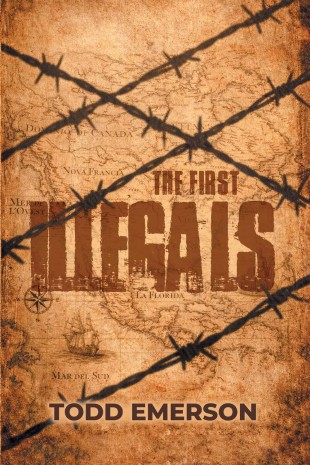
View Back Cover
BOOK DETAILS
Genre: Political Science
Subgenre: General,
Pages: 274
Trim Size: 6x9
eBook ISBN: 9798892858533
Paperback ISBN: 9798892858526
The First Illegals
See all books by Todd Emerson
BOOK DETAILS
Genre: Political Science
Subgenre: General,
Pages: 274
Trim Size: 6x9
eBook ISBN: 9798892858533
Paperback ISBN: 9798892858526
About The Book
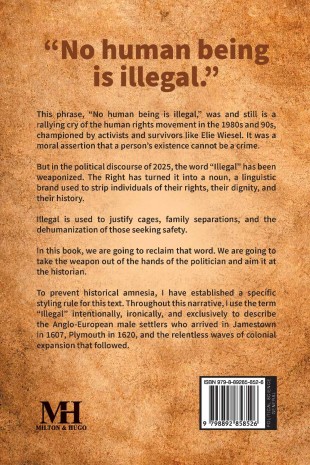
"No human being is illegal."
This phrase, "No human being is illegal," was and still is a rallying cry of the human rights movement in the 1980s and 90s, championed by activists and survivors like Elie Wiesel. It was a moral assertion that a person's existence cannot be a crime.
But in the political discourse of 2025, the word "Illegal" has been weaponized. The Right has turned it into a noun, a linguistic brand used to strip individuals of their rights, their dignity, and their history.
Illegal is used to justify cages, family separations, and the dehumanization of those seeking safety.
In this book, we are going to reclaim that word. We are going to take the weapon out of the hands of the politician and aim it at the historian.
To prevent historical amnesia, I have established a specific styling rule for this text. Throughout this narrative, I use the term "Illegal" intentionally, ironically, and exclusively to describe
the Anglo-European male settlers who arrived in Jamestown in 1607, Plymouth in 1620, and the relentless waves of colonial expansion that followed.
About The Book
"No human being is illegal."
This phrase, "No human being is illegal," was and still is a rallying cry of the human rights movement in the 1980s and 90s, championed by activists and survivors like Elie Wiesel. It was a moral assertion that a person's existence cannot be a crime.
But in the political discourse of 2025, the word "Illegal" has been weaponized. The Right has turned it into a noun, a linguistic brand used to strip individuals of their rights, their dignity, and their history.
Illegal is used to justify cages, family separations, and the dehumanization of those seeking safety.
In this book, we are going to reclaim that word. We are going to take the weapon out of the hands of the politician and aim it at the historian.
To prevent historical amnesia, I have established a specific styling rule for this text. Throughout this narrative, I use the term "Illegal" intentionally, ironically, and exclusively to describe
the Anglo-European male settlers who arrived in Jamestown in 1607, Plymouth in 1620, and the relentless waves of colonial expansion that followed.
RECOMMENDED BOOKS
 Secrets of the Canyon : A Memoir of the Vanis...
Linda McGee
Secrets of the Canyon : A Memoir of the Vanis...
Linda McGee
 Tinker Bell the Basset and Friends: The Beach...
Dawn Hunter
Tinker Bell the Basset and Friends: The Beach...
Dawn Hunter
 Who Am I Without You
Mirela Lemut
Who Am I Without You
Mirela Lemut
 ¿Quién soy yo sin ti? : Un viaje a través de...
Mirela Lemut
¿Quién soy yo sin ti? : Un viaje a través de...
Mirela Lemut
 What Food Will I Eat?
Sofia Canaday Steurer
What Food Will I Eat?
Sofia Canaday Steurer
 Brick by Brick
Dylan House
Brick by Brick
Dylan House
 Breaking the Eternal Veil
Kieasha di Paola
Breaking the Eternal Veil
Kieasha di Paola
 Tonight They Come for US All: It All Comes Do...
Naru K. Williams II
Tonight They Come for US All: It All Comes Do...
Naru K. Williams II